15 min read
One Dustbin: The New Standard for Construction Waste
One Dustbin: The New Standard for Construction Waste
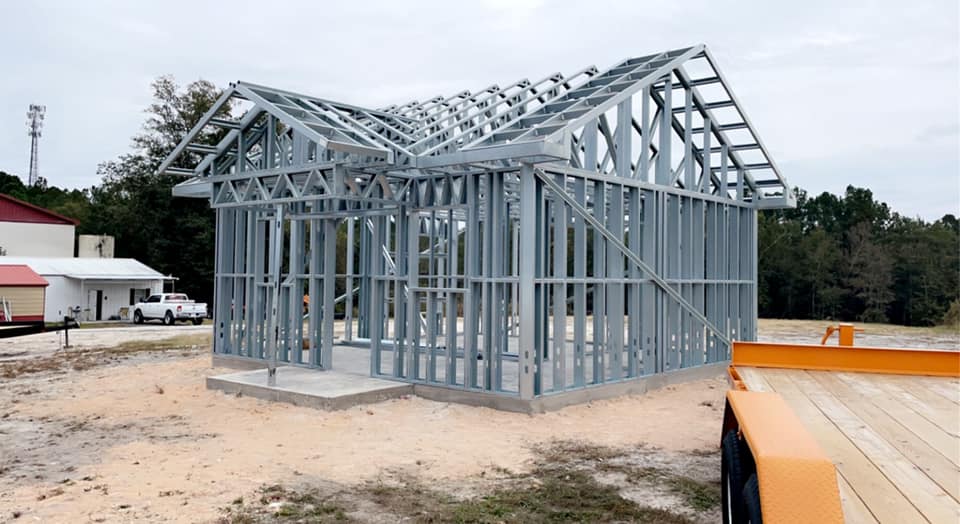
A 5,000 sq ft structure that generates waste fitting in a single dustbin instead of five full dumpsters isn't greenwashing — it's what happens when every cut is calculated before it's made. This is what genuinely sustainable framing looks like in practice.
Waste reduction | Insurance savings | NAHB lumber waste estimate |
|---|---|---|
5→1dumpsters to a single dustbin. A 5,000 sq ft structure framed with Fraaime generates what fits in one bin — not four or five full skips of cut lumber. | 20–40%lower insurance premiums are achievable for fire-resistant precision-framed structures — savings that compound over the life of the building. | 40%of all jobsite waste on a residential build is excess or unused wood, according to National Association of Home Builders data. |
Construction is one of the world's most material-intensive industries, and one of its most wasteful. In the United States, building activity generates over 600 million tons of debris annually — and a substantial portion of that is structural lumber: offcuts, miscuts, overorders, and material that arrived on site, got weathered, and was eventually hauled away as trash. For the residential framing trade specifically, waste has been baked into standard practice for so long that it's essentially invisible.
That invisibility is expensive. And it's no longer necessary.
How Framing Waste Becomes Normal
The National Association of Home Builders estimates that excess or unused wood accounts for up to 40% of jobsite waste on a residential build. Most estimators know this and factor it in — adding 8–12% to every material order as a standard "waste buffer." This practice is so normalized that it appears as a default setting in takeoff software used across the industry.
On a conventional 5,000 sq ft home framing package, that buffer translates to several thousand dollars of lumber ordered with the expectation it will be discarded. Add the physical reality of field cutting — studs marked, cut, and occasionally miscalculated; headers ordered to wrong dimensions; plates cut long and trimmed back — and the pile grows. By the time framing is complete, four to five full dumpsters of structural lumber waste is typical.
That waste costs money three times: when it's purchased, when it takes up space and handling time on site, and when it's hauled away. The construction waste estimator data puts typical disposal at several hundred to several thousand dollars per dumpster when rental, hauling, and tipping fees are included. None of this appears in the framing bid — it shows up later, quietly, in the project budget.
What Zero Waste Requires
Eliminating framing waste isn't about being more careful on site. It's about changing when the cutting decisions are made. In conventional framing, cutting happens in the field — after the framing crew has measured, marked, and made a judgment call. In precision offsite framing, cutting happens in a controlled environment, from an exact digital specification, using machinery that doesn't misread a mark or guess at a measurement.
Waste is pervasive, but it doesn't have to be. Too many builders accept waste as an unavoidable consequence — without enough consideration being given to how it adds to a project's cost.
This is the core mechanical difference. Fraaime's AI generates a framing package in which every element — every stud, every header, every beam, every plate — has a precise length, a precise location, and a precise structural role. The material list that comes out of that process has no buffer. There's no "order extra in case." There's no provision for miscuts, because the system that generates the specifications doesn't make the kind of errors that field cutting produces.
The result: a 5,000 sq ft structure produces waste that fits in a single dustbin. No miscuts. No offcuts from ill-fitting lumber. No damaged material from sitting outside too long between deliveries. The entire framing package arrives, gets assembled, and the job site is clean.
The Weyerhaeuser Finding — and What It Actually Means
Weyerhaeuser, one of North America's largest timber companies, has documented the waste problem in detail: excess wood is pervasive, and most of it can be eliminated through planning, technology, and a systems-level view of the framing package. Their research points to advanced framing practices — treating the frame as an integrated system rather than a collection of individual pieces — as the path to material efficiency.
A residential build generates 3–5 pounds of construction debris per square foot on average. At 5,000 sq ft, that's 7.5 to 12.5 tons of waste — the majority of which, in the framing phase, is structural lumber. Precision framing doesn't reduce this number. It eliminates the framing contribution entirely.
Fraaime's approach operationalizes exactly this systems view: the AI doesn't calculate one stud at a time, it optimizes the entire framing layout simultaneously — minimizing material while maintaining structural integrity, code compliance, and constructability. The output isn't just less wasteful. It's structurally efficient in a way that field framing can't replicate, because no human working on a site can hold the entire structural system in mind while making individual cutting decisions.
The Insurance Dimension
Beyond the direct waste reduction, there's a downstream financial benefit that most builders and developers don't fully account for: insurance. Structures built with fire-resistant, precision-framed systems qualify for meaningfully lower homeowner and builder's risk insurance premiums. Fraaime's clients can save 20–40% on insurance costs over the life of the building — a number that compounds significantly over a 30-year horizon.
On a home with annual insurance premiums of $3,000, a 30% reduction means $900 saved every year. Over 30 years, that's $27,000 — from insurance alone. Stack that against the material waste savings, the disposal cost savings, and the labor hours saved from a cleaner site, and the financial case for precision framing is compelling at every level of the pro forma.
What Sustainability Actually Looks Like
The construction industry has been working on sustainability for years — low-VOC materials, certified lumber, recycled content, green building programs. These are valuable, but they address the wrong end of the problem. The most sustainable material is the one that was never wasted in the first place.
One dustbin of waste from a 5,000 sq ft build isn't a metric. It's a standard — a demonstration that precision planning, AI-generated structural packages, and offsite manufacturing can reduce construction waste from a significant line item to a rounding error. The lumber that would have filled those four or five dumpsters doesn't need to be certified, recycled, or managed. It never gets purchased, never gets cut, and never gets hauled away.
That is what genuinely sustainable framing looks like.
The Sustainability Case
The NAHB number | Up to 40% of all jobsite waste on a residential build is excess or unused wood — most of it the direct result of field cutting and over-ordering. |
Why waste happens | Conventional framing makes cutting decisions in the field, under time pressure. Precision framing makes those decisions in a controlled environment, from exact specifications. |
5,000 sq ft → 1 dustbin | Fraaime's offsite system produces a complete large residential frame with waste that fits in a single dustbin — not the four or five dumpsters of conventional framing. |
Insurance impact | Fire-resistant precision framing qualifies for 20–40% lower insurance premiums — savings that compound significantly over the life of the building. |
True sustainability | The most sustainable material is the one that's never wasted. Precision framing eliminates the framing waste contribution entirely — not reduces it. |
Ready to frame smarter?
A 5,000 sq ft structure that generates waste fitting in a single dustbin instead of five full dumpsters isn't greenwashing — it's what happens when every cut is calculated before it's made. This is what genuinely sustainable framing looks like in practice.
Waste reduction | Insurance savings | NAHB lumber waste estimate |
|---|---|---|
5→1dumpsters to a single dustbin. A 5,000 sq ft structure framed with Fraaime generates what fits in one bin — not four or five full skips of cut lumber. | 20–40%lower insurance premiums are achievable for fire-resistant precision-framed structures — savings that compound over the life of the building. | 40%of all jobsite waste on a residential build is excess or unused wood, according to National Association of Home Builders data. |
Construction is one of the world's most material-intensive industries, and one of its most wasteful. In the United States, building activity generates over 600 million tons of debris annually — and a substantial portion of that is structural lumber: offcuts, miscuts, overorders, and material that arrived on site, got weathered, and was eventually hauled away as trash. For the residential framing trade specifically, waste has been baked into standard practice for so long that it's essentially invisible.
That invisibility is expensive. And it's no longer necessary.
How Framing Waste Becomes Normal
The National Association of Home Builders estimates that excess or unused wood accounts for up to 40% of jobsite waste on a residential build. Most estimators know this and factor it in — adding 8–12% to every material order as a standard "waste buffer." This practice is so normalized that it appears as a default setting in takeoff software used across the industry.
On a conventional 5,000 sq ft home framing package, that buffer translates to several thousand dollars of lumber ordered with the expectation it will be discarded. Add the physical reality of field cutting — studs marked, cut, and occasionally miscalculated; headers ordered to wrong dimensions; plates cut long and trimmed back — and the pile grows. By the time framing is complete, four to five full dumpsters of structural lumber waste is typical.
That waste costs money three times: when it's purchased, when it takes up space and handling time on site, and when it's hauled away. The construction waste estimator data puts typical disposal at several hundred to several thousand dollars per dumpster when rental, hauling, and tipping fees are included. None of this appears in the framing bid — it shows up later, quietly, in the project budget.
What Zero Waste Requires
Eliminating framing waste isn't about being more careful on site. It's about changing when the cutting decisions are made. In conventional framing, cutting happens in the field — after the framing crew has measured, marked, and made a judgment call. In precision offsite framing, cutting happens in a controlled environment, from an exact digital specification, using machinery that doesn't misread a mark or guess at a measurement.
Waste is pervasive, but it doesn't have to be. Too many builders accept waste as an unavoidable consequence — without enough consideration being given to how it adds to a project's cost.
This is the core mechanical difference. Fraaime's AI generates a framing package in which every element — every stud, every header, every beam, every plate — has a precise length, a precise location, and a precise structural role. The material list that comes out of that process has no buffer. There's no "order extra in case." There's no provision for miscuts, because the system that generates the specifications doesn't make the kind of errors that field cutting produces.
The result: a 5,000 sq ft structure produces waste that fits in a single dustbin. No miscuts. No offcuts from ill-fitting lumber. No damaged material from sitting outside too long between deliveries. The entire framing package arrives, gets assembled, and the job site is clean.
The Weyerhaeuser Finding — and What It Actually Means
Weyerhaeuser, one of North America's largest timber companies, has documented the waste problem in detail: excess wood is pervasive, and most of it can be eliminated through planning, technology, and a systems-level view of the framing package. Their research points to advanced framing practices — treating the frame as an integrated system rather than a collection of individual pieces — as the path to material efficiency.
A residential build generates 3–5 pounds of construction debris per square foot on average. At 5,000 sq ft, that's 7.5 to 12.5 tons of waste — the majority of which, in the framing phase, is structural lumber. Precision framing doesn't reduce this number. It eliminates the framing contribution entirely.
Fraaime's approach operationalizes exactly this systems view: the AI doesn't calculate one stud at a time, it optimizes the entire framing layout simultaneously — minimizing material while maintaining structural integrity, code compliance, and constructability. The output isn't just less wasteful. It's structurally efficient in a way that field framing can't replicate, because no human working on a site can hold the entire structural system in mind while making individual cutting decisions.
The Insurance Dimension
Beyond the direct waste reduction, there's a downstream financial benefit that most builders and developers don't fully account for: insurance. Structures built with fire-resistant, precision-framed systems qualify for meaningfully lower homeowner and builder's risk insurance premiums. Fraaime's clients can save 20–40% on insurance costs over the life of the building — a number that compounds significantly over a 30-year horizon.
On a home with annual insurance premiums of $3,000, a 30% reduction means $900 saved every year. Over 30 years, that's $27,000 — from insurance alone. Stack that against the material waste savings, the disposal cost savings, and the labor hours saved from a cleaner site, and the financial case for precision framing is compelling at every level of the pro forma.
What Sustainability Actually Looks Like
The construction industry has been working on sustainability for years — low-VOC materials, certified lumber, recycled content, green building programs. These are valuable, but they address the wrong end of the problem. The most sustainable material is the one that was never wasted in the first place.
One dustbin of waste from a 5,000 sq ft build isn't a metric. It's a standard — a demonstration that precision planning, AI-generated structural packages, and offsite manufacturing can reduce construction waste from a significant line item to a rounding error. The lumber that would have filled those four or five dumpsters doesn't need to be certified, recycled, or managed. It never gets purchased, never gets cut, and never gets hauled away.
That is what genuinely sustainable framing looks like.
The Sustainability Case
The NAHB number | Up to 40% of all jobsite waste on a residential build is excess or unused wood — most of it the direct result of field cutting and over-ordering. |
Why waste happens | Conventional framing makes cutting decisions in the field, under time pressure. Precision framing makes those decisions in a controlled environment, from exact specifications. |
5,000 sq ft → 1 dustbin | Fraaime's offsite system produces a complete large residential frame with waste that fits in a single dustbin — not the four or five dumpsters of conventional framing. |
Insurance impact | Fire-resistant precision framing qualifies for 20–40% lower insurance premiums — savings that compound significantly over the life of the building. |
True sustainability | The most sustainable material is the one that's never wasted. Precision framing eliminates the framing waste contribution entirely — not reduces it. |
Ready to frame smarter?
A 5,000 sq ft structure that generates waste fitting in a single dustbin instead of five full dumpsters isn't greenwashing — it's what happens when every cut is calculated before it's made. This is what genuinely sustainable framing looks like in practice.
Waste reduction | Insurance savings | NAHB lumber waste estimate |
|---|---|---|
5→1dumpsters to a single dustbin. A 5,000 sq ft structure framed with Fraaime generates what fits in one bin — not four or five full skips of cut lumber. | 20–40%lower insurance premiums are achievable for fire-resistant precision-framed structures — savings that compound over the life of the building. | 40%of all jobsite waste on a residential build is excess or unused wood, according to National Association of Home Builders data. |
Construction is one of the world's most material-intensive industries, and one of its most wasteful. In the United States, building activity generates over 600 million tons of debris annually — and a substantial portion of that is structural lumber: offcuts, miscuts, overorders, and material that arrived on site, got weathered, and was eventually hauled away as trash. For the residential framing trade specifically, waste has been baked into standard practice for so long that it's essentially invisible.
That invisibility is expensive. And it's no longer necessary.
How Framing Waste Becomes Normal
The National Association of Home Builders estimates that excess or unused wood accounts for up to 40% of jobsite waste on a residential build. Most estimators know this and factor it in — adding 8–12% to every material order as a standard "waste buffer." This practice is so normalized that it appears as a default setting in takeoff software used across the industry.
On a conventional 5,000 sq ft home framing package, that buffer translates to several thousand dollars of lumber ordered with the expectation it will be discarded. Add the physical reality of field cutting — studs marked, cut, and occasionally miscalculated; headers ordered to wrong dimensions; plates cut long and trimmed back — and the pile grows. By the time framing is complete, four to five full dumpsters of structural lumber waste is typical.
That waste costs money three times: when it's purchased, when it takes up space and handling time on site, and when it's hauled away. The construction waste estimator data puts typical disposal at several hundred to several thousand dollars per dumpster when rental, hauling, and tipping fees are included. None of this appears in the framing bid — it shows up later, quietly, in the project budget.
What Zero Waste Requires
Eliminating framing waste isn't about being more careful on site. It's about changing when the cutting decisions are made. In conventional framing, cutting happens in the field — after the framing crew has measured, marked, and made a judgment call. In precision offsite framing, cutting happens in a controlled environment, from an exact digital specification, using machinery that doesn't misread a mark or guess at a measurement.
Waste is pervasive, but it doesn't have to be. Too many builders accept waste as an unavoidable consequence — without enough consideration being given to how it adds to a project's cost.
This is the core mechanical difference. Fraaime's AI generates a framing package in which every element — every stud, every header, every beam, every plate — has a precise length, a precise location, and a precise structural role. The material list that comes out of that process has no buffer. There's no "order extra in case." There's no provision for miscuts, because the system that generates the specifications doesn't make the kind of errors that field cutting produces.
The result: a 5,000 sq ft structure produces waste that fits in a single dustbin. No miscuts. No offcuts from ill-fitting lumber. No damaged material from sitting outside too long between deliveries. The entire framing package arrives, gets assembled, and the job site is clean.
The Weyerhaeuser Finding — and What It Actually Means
Weyerhaeuser, one of North America's largest timber companies, has documented the waste problem in detail: excess wood is pervasive, and most of it can be eliminated through planning, technology, and a systems-level view of the framing package. Their research points to advanced framing practices — treating the frame as an integrated system rather than a collection of individual pieces — as the path to material efficiency.
A residential build generates 3–5 pounds of construction debris per square foot on average. At 5,000 sq ft, that's 7.5 to 12.5 tons of waste — the majority of which, in the framing phase, is structural lumber. Precision framing doesn't reduce this number. It eliminates the framing contribution entirely.
Fraaime's approach operationalizes exactly this systems view: the AI doesn't calculate one stud at a time, it optimizes the entire framing layout simultaneously — minimizing material while maintaining structural integrity, code compliance, and constructability. The output isn't just less wasteful. It's structurally efficient in a way that field framing can't replicate, because no human working on a site can hold the entire structural system in mind while making individual cutting decisions.
The Insurance Dimension
Beyond the direct waste reduction, there's a downstream financial benefit that most builders and developers don't fully account for: insurance. Structures built with fire-resistant, precision-framed systems qualify for meaningfully lower homeowner and builder's risk insurance premiums. Fraaime's clients can save 20–40% on insurance costs over the life of the building — a number that compounds significantly over a 30-year horizon.
On a home with annual insurance premiums of $3,000, a 30% reduction means $900 saved every year. Over 30 years, that's $27,000 — from insurance alone. Stack that against the material waste savings, the disposal cost savings, and the labor hours saved from a cleaner site, and the financial case for precision framing is compelling at every level of the pro forma.
What Sustainability Actually Looks Like
The construction industry has been working on sustainability for years — low-VOC materials, certified lumber, recycled content, green building programs. These are valuable, but they address the wrong end of the problem. The most sustainable material is the one that was never wasted in the first place.
One dustbin of waste from a 5,000 sq ft build isn't a metric. It's a standard — a demonstration that precision planning, AI-generated structural packages, and offsite manufacturing can reduce construction waste from a significant line item to a rounding error. The lumber that would have filled those four or five dumpsters doesn't need to be certified, recycled, or managed. It never gets purchased, never gets cut, and never gets hauled away.
That is what genuinely sustainable framing looks like.
The Sustainability Case
The NAHB number | Up to 40% of all jobsite waste on a residential build is excess or unused wood — most of it the direct result of field cutting and over-ordering. |
Why waste happens | Conventional framing makes cutting decisions in the field, under time pressure. Precision framing makes those decisions in a controlled environment, from exact specifications. |
5,000 sq ft → 1 dustbin | Fraaime's offsite system produces a complete large residential frame with waste that fits in a single dustbin — not the four or five dumpsters of conventional framing. |
Insurance impact | Fire-resistant precision framing qualifies for 20–40% lower insurance premiums — savings that compound significantly over the life of the building. |
True sustainability | The most sustainable material is the one that's never wasted. Precision framing eliminates the framing waste contribution entirely — not reduces it. |
Ready to frame smarter?
Table of contents
Written by

Lorenzo B.
Engineering Lead
Category
Sustainability