15 min read
How Precision Framing Protects Your Pro Forma
How Precision Framing Protects Your Pro Forma
Every week of schedule saved is a week of carrying costs eliminated — here's how offsite precision framing compresses timelines, accelerates finishing trades, and protects developer margins from the framing phase forward.
Framing time reduction | Soft cost sensitivity | Global market shift |
|---|---|---|
30–50%Less time in the framing phase, consistently achieved — with some projects moving from weeks of conventional framing to under one week on site. | Every weekof schedule slippage cascades directly into higher financing, insurance, and carrying costs — the costs most developers underestimate. | $225Bprojected offsite construction market by 2030 — growing at 4.6% CAGR as developers worldwide shift to precision methods to protect margins. |
Developers don't think about framing the way builders do. For a general contractor, framing is a phase — a section of the schedule with a crew, a material delivery, and a completion date. For a developer, framing is a financial event: the point at which the most expensive phase of construction begins, the construction loan is actively drawing, and every day on the clock is carrying cost accumulating against the pro forma.
That financial lens changes how the value of precision framing needs to be explained. It's not just about better walls. It's about what better walls do to the numbers.
The Soft Cost Problem Nobody Talks About Enough
Every week of construction schedule is carrying cost. Loan origination fees on a construction loan typically run 1–2% of the total loan amount. Interest accrues throughout the draw period. Insurance, property taxes, and developer overhead continue regardless of whether a crew is on site or waiting for materials. A project delayed by six months isn't just six months late — it's six months of cash flowing out before any flows in.
Industry analysis consistently shows that project delays are linked directly to increased carrying costs, and that rising interest rates are placing increasing weight on schedule certainty. Every week added to a construction timeline is a week of compounding cost — and framing, being the earliest major structural phase, is where schedule problems most often originate.
Because many soft costs are time-sensitive, any delay in the construction schedule cascades directly into higher financing, insurance, and carrying costs. Keeping the project on schedule is one of the most effective ways to control the soft cost budget.
Framing Is Where the Schedule Is Set
Of all the phases in a residential or light commercial build, framing is most susceptible to schedule slippage — and whose delays compound most aggressively into everything that follows. Framing delays mean MEP rough-in delays. MEP delays push insulation. Insulation delays push drywall. Drywall pushes finish work. By the time a six-week framing schedule has slipped three weeks, a project can be months behind its original completion date.
Research from the Dodge Construction Network shows builders using offsite methods routinely achieve 20–50% reductions in construction schedules. The World Economic Forum has identified offsite and panelized construction as essential to improving productivity and scaling faster project delivery globally. These aren't speculative projections — they reflect what happens when the framing phase stops being a field manufacturing operation and becomes a precision assembly operation.
Parallel Scheduling: The Time Advantage Most Builders Miss
Conventional framing is inherently sequential. The foundation has to be complete before framing begins. Framing has to be substantially complete before MEP rough-in starts. This waterfall structure means that even a fast framing crew is adding weeks of pure elapsed time to the schedule — time during which the construction loan is active and the soft cost meter is running.
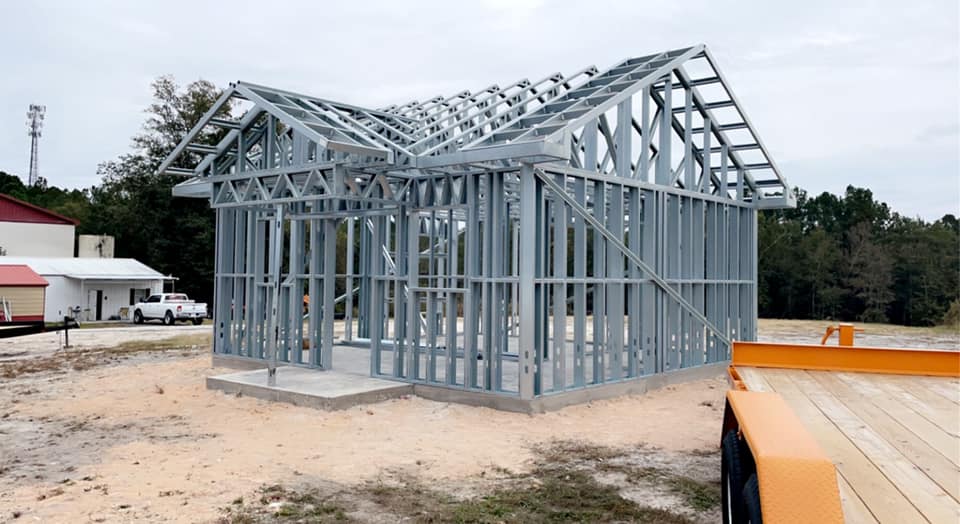
Offsite precision framing breaks this sequence. While foundation work is underway, the framing package is being engineered, manufactured, and prepared. When the slab is poured and cured, the panels are ready. There's no wait for a framing crew to mobilize, no material delivery to queue, no field measuring to complete before cutting can begin. The framing phase starts at the earliest possible moment — not when the site is ready for a conventional crew, but the moment the panels arrive.
Fraaime clients consistently see 30–50% reduction in total framing time. On projects where framing previously took six to eight weeks, precision offsite framing completes in under one week on site. Across the project lifecycle, parallel scheduling — framing prepared during foundation work — can deliver months of total schedule compression, eliminating the carrying costs that go with them.
How Accurate Framing Accelerates Every Trade Behind It
The schedule advantage doesn't stop when the frame is up. Because every wall in a Fraaime-framed building is plumb to ±1.0 mm tolerance, the trades that follow can start earlier and work faster. Cabinetry templates can be cut before drywall is hung. Slab work can begin in completed zones while framing continues elsewhere. Flooring, tile, and millwork contractors aren't waiting for adjustment and rework — they're working against surfaces that are exactly where the plans say they should be.
Conventional framing requires finishing trades to absorb framing variances. An out-of-plumb wall adds time to every trade that touches it. An out-of-square room adds complexity to every detail that requires a true angle. Those adjustments are invisible in the schedule — they appear as extra days in cabinet installation, extra time in flooring layout, extra cuts in tile — but they accumulate to real schedule and budget impact that shows up in final cost reports and contingency drawdowns.
What This Means for the Numbers
For a developer building a custom home or a multi-unit residential project, the financial impact of precision framing shows up in several places simultaneously. A shorter loan draw period means less interest paid. Earlier certificate of occupancy on a build-to-sell means earlier closing and capital return. Earlier stabilization on a build-to-rent means earlier cash flow and faster path to full loan repayment. Cleaner finishing trade schedules mean fewer change orders, fewer contingency draws, and a final budget that looks closer to the original underwriting.
The global offsite construction market was valued at $172 billion in 2024 and is projected to reach $225 billion by 2030, growing at 4.6% annually as developers worldwide shift toward methods that protect margin through precision. The economics of framing are being repriced. Developers who understand that the frame isn't just a cost line — it's the foundation of the entire project schedule — are the ones who will consistently deliver on timeline, on budget, and ahead of the competition.
Developer Benefits
1 — Carrying cost reduction | Every week of schedule saved is a week of construction loan interest, insurance, and overhead eliminated — costs that accumulate invisibly but add up fast. |
2 — Parallel scheduling | Framing packages are engineered and manufactured while site work runs — so the frame starts the moment the foundation is ready, not weeks later. |
3 — 30–50% faster framing | Consistent across Fraaime projects. What takes six to eight weeks conventionally completes in under one week on site. |
4 — Finishing trades accelerate | Millimeter-accurate framing means cabinetry, flooring, and slab work can start earlier — compressing the overall schedule further downstream. |
5 — Better final numbers | Faster delivery, lower carry, fewer contingency draws. The pro forma that goes into underwriting is the one that comes out at close. |
Ready to frame smarter?
Every week of schedule saved is a week of carrying costs eliminated — here's how offsite precision framing compresses timelines, accelerates finishing trades, and protects developer margins from the framing phase forward.
Framing time reduction | Soft cost sensitivity | Global market shift |
|---|---|---|
30–50%Less time in the framing phase, consistently achieved — with some projects moving from weeks of conventional framing to under one week on site. | Every weekof schedule slippage cascades directly into higher financing, insurance, and carrying costs — the costs most developers underestimate. | $225Bprojected offsite construction market by 2030 — growing at 4.6% CAGR as developers worldwide shift to precision methods to protect margins. |
Developers don't think about framing the way builders do. For a general contractor, framing is a phase — a section of the schedule with a crew, a material delivery, and a completion date. For a developer, framing is a financial event: the point at which the most expensive phase of construction begins, the construction loan is actively drawing, and every day on the clock is carrying cost accumulating against the pro forma.
That financial lens changes how the value of precision framing needs to be explained. It's not just about better walls. It's about what better walls do to the numbers.
The Soft Cost Problem Nobody Talks About Enough
Every week of construction schedule is carrying cost. Loan origination fees on a construction loan typically run 1–2% of the total loan amount. Interest accrues throughout the draw period. Insurance, property taxes, and developer overhead continue regardless of whether a crew is on site or waiting for materials. A project delayed by six months isn't just six months late — it's six months of cash flowing out before any flows in.
Industry analysis consistently shows that project delays are linked directly to increased carrying costs, and that rising interest rates are placing increasing weight on schedule certainty. Every week added to a construction timeline is a week of compounding cost — and framing, being the earliest major structural phase, is where schedule problems most often originate.
Because many soft costs are time-sensitive, any delay in the construction schedule cascades directly into higher financing, insurance, and carrying costs. Keeping the project on schedule is one of the most effective ways to control the soft cost budget.
Framing Is Where the Schedule Is Set
Of all the phases in a residential or light commercial build, framing is most susceptible to schedule slippage — and whose delays compound most aggressively into everything that follows. Framing delays mean MEP rough-in delays. MEP delays push insulation. Insulation delays push drywall. Drywall pushes finish work. By the time a six-week framing schedule has slipped three weeks, a project can be months behind its original completion date.
Research from the Dodge Construction Network shows builders using offsite methods routinely achieve 20–50% reductions in construction schedules. The World Economic Forum has identified offsite and panelized construction as essential to improving productivity and scaling faster project delivery globally. These aren't speculative projections — they reflect what happens when the framing phase stops being a field manufacturing operation and becomes a precision assembly operation.
Parallel Scheduling: The Time Advantage Most Builders Miss
Conventional framing is inherently sequential. The foundation has to be complete before framing begins. Framing has to be substantially complete before MEP rough-in starts. This waterfall structure means that even a fast framing crew is adding weeks of pure elapsed time to the schedule — time during which the construction loan is active and the soft cost meter is running.
Offsite precision framing breaks this sequence. While foundation work is underway, the framing package is being engineered, manufactured, and prepared. When the slab is poured and cured, the panels are ready. There's no wait for a framing crew to mobilize, no material delivery to queue, no field measuring to complete before cutting can begin. The framing phase starts at the earliest possible moment — not when the site is ready for a conventional crew, but the moment the panels arrive.
Fraaime clients consistently see 30–50% reduction in total framing time. On projects where framing previously took six to eight weeks, precision offsite framing completes in under one week on site. Across the project lifecycle, parallel scheduling — framing prepared during foundation work — can deliver months of total schedule compression, eliminating the carrying costs that go with them.
How Accurate Framing Accelerates Every Trade Behind It
The schedule advantage doesn't stop when the frame is up. Because every wall in a Fraaime-framed building is plumb to ±1.0 mm tolerance, the trades that follow can start earlier and work faster. Cabinetry templates can be cut before drywall is hung. Slab work can begin in completed zones while framing continues elsewhere. Flooring, tile, and millwork contractors aren't waiting for adjustment and rework — they're working against surfaces that are exactly where the plans say they should be.
Conventional framing requires finishing trades to absorb framing variances. An out-of-plumb wall adds time to every trade that touches it. An out-of-square room adds complexity to every detail that requires a true angle. Those adjustments are invisible in the schedule — they appear as extra days in cabinet installation, extra time in flooring layout, extra cuts in tile — but they accumulate to real schedule and budget impact that shows up in final cost reports and contingency drawdowns.
What This Means for the Numbers
For a developer building a custom home or a multi-unit residential project, the financial impact of precision framing shows up in several places simultaneously. A shorter loan draw period means less interest paid. Earlier certificate of occupancy on a build-to-sell means earlier closing and capital return. Earlier stabilization on a build-to-rent means earlier cash flow and faster path to full loan repayment. Cleaner finishing trade schedules mean fewer change orders, fewer contingency draws, and a final budget that looks closer to the original underwriting.
The global offsite construction market was valued at $172 billion in 2024 and is projected to reach $225 billion by 2030, growing at 4.6% annually as developers worldwide shift toward methods that protect margin through precision. The economics of framing are being repriced. Developers who understand that the frame isn't just a cost line — it's the foundation of the entire project schedule — are the ones who will consistently deliver on timeline, on budget, and ahead of the competition.
Developer Benefits
1 — Carrying cost reduction | Every week of schedule saved is a week of construction loan interest, insurance, and overhead eliminated — costs that accumulate invisibly but add up fast. |
2 — Parallel scheduling | Framing packages are engineered and manufactured while site work runs — so the frame starts the moment the foundation is ready, not weeks later. |
3 — 30–50% faster framing | Consistent across Fraaime projects. What takes six to eight weeks conventionally completes in under one week on site. |
4 — Finishing trades accelerate | Millimeter-accurate framing means cabinetry, flooring, and slab work can start earlier — compressing the overall schedule further downstream. |
5 — Better final numbers | Faster delivery, lower carry, fewer contingency draws. The pro forma that goes into underwriting is the one that comes out at close. |
Ready to frame smarter?
Every week of schedule saved is a week of carrying costs eliminated — here's how offsite precision framing compresses timelines, accelerates finishing trades, and protects developer margins from the framing phase forward.
Framing time reduction | Soft cost sensitivity | Global market shift |
|---|---|---|
30–50%Less time in the framing phase, consistently achieved — with some projects moving from weeks of conventional framing to under one week on site. | Every weekof schedule slippage cascades directly into higher financing, insurance, and carrying costs — the costs most developers underestimate. | $225Bprojected offsite construction market by 2030 — growing at 4.6% CAGR as developers worldwide shift to precision methods to protect margins. |
Developers don't think about framing the way builders do. For a general contractor, framing is a phase — a section of the schedule with a crew, a material delivery, and a completion date. For a developer, framing is a financial event: the point at which the most expensive phase of construction begins, the construction loan is actively drawing, and every day on the clock is carrying cost accumulating against the pro forma.
That financial lens changes how the value of precision framing needs to be explained. It's not just about better walls. It's about what better walls do to the numbers.
The Soft Cost Problem Nobody Talks About Enough
Every week of construction schedule is carrying cost. Loan origination fees on a construction loan typically run 1–2% of the total loan amount. Interest accrues throughout the draw period. Insurance, property taxes, and developer overhead continue regardless of whether a crew is on site or waiting for materials. A project delayed by six months isn't just six months late — it's six months of cash flowing out before any flows in.
Industry analysis consistently shows that project delays are linked directly to increased carrying costs, and that rising interest rates are placing increasing weight on schedule certainty. Every week added to a construction timeline is a week of compounding cost — and framing, being the earliest major structural phase, is where schedule problems most often originate.
Because many soft costs are time-sensitive, any delay in the construction schedule cascades directly into higher financing, insurance, and carrying costs. Keeping the project on schedule is one of the most effective ways to control the soft cost budget.
Framing Is Where the Schedule Is Set
Of all the phases in a residential or light commercial build, framing is most susceptible to schedule slippage — and whose delays compound most aggressively into everything that follows. Framing delays mean MEP rough-in delays. MEP delays push insulation. Insulation delays push drywall. Drywall pushes finish work. By the time a six-week framing schedule has slipped three weeks, a project can be months behind its original completion date.
Research from the Dodge Construction Network shows builders using offsite methods routinely achieve 20–50% reductions in construction schedules. The World Economic Forum has identified offsite and panelized construction as essential to improving productivity and scaling faster project delivery globally. These aren't speculative projections — they reflect what happens when the framing phase stops being a field manufacturing operation and becomes a precision assembly operation.
Parallel Scheduling: The Time Advantage Most Builders Miss
Conventional framing is inherently sequential. The foundation has to be complete before framing begins. Framing has to be substantially complete before MEP rough-in starts. This waterfall structure means that even a fast framing crew is adding weeks of pure elapsed time to the schedule — time during which the construction loan is active and the soft cost meter is running.
Offsite precision framing breaks this sequence. While foundation work is underway, the framing package is being engineered, manufactured, and prepared. When the slab is poured and cured, the panels are ready. There's no wait for a framing crew to mobilize, no material delivery to queue, no field measuring to complete before cutting can begin. The framing phase starts at the earliest possible moment — not when the site is ready for a conventional crew, but the moment the panels arrive.
Fraaime clients consistently see 30–50% reduction in total framing time. On projects where framing previously took six to eight weeks, precision offsite framing completes in under one week on site. Across the project lifecycle, parallel scheduling — framing prepared during foundation work — can deliver months of total schedule compression, eliminating the carrying costs that go with them.
How Accurate Framing Accelerates Every Trade Behind It
The schedule advantage doesn't stop when the frame is up. Because every wall in a Fraaime-framed building is plumb to ±1.0 mm tolerance, the trades that follow can start earlier and work faster. Cabinetry templates can be cut before drywall is hung. Slab work can begin in completed zones while framing continues elsewhere. Flooring, tile, and millwork contractors aren't waiting for adjustment and rework — they're working against surfaces that are exactly where the plans say they should be.
Conventional framing requires finishing trades to absorb framing variances. An out-of-plumb wall adds time to every trade that touches it. An out-of-square room adds complexity to every detail that requires a true angle. Those adjustments are invisible in the schedule — they appear as extra days in cabinet installation, extra time in flooring layout, extra cuts in tile — but they accumulate to real schedule and budget impact that shows up in final cost reports and contingency drawdowns.
What This Means for the Numbers
For a developer building a custom home or a multi-unit residential project, the financial impact of precision framing shows up in several places simultaneously. A shorter loan draw period means less interest paid. Earlier certificate of occupancy on a build-to-sell means earlier closing and capital return. Earlier stabilization on a build-to-rent means earlier cash flow and faster path to full loan repayment. Cleaner finishing trade schedules mean fewer change orders, fewer contingency draws, and a final budget that looks closer to the original underwriting.
The global offsite construction market was valued at $172 billion in 2024 and is projected to reach $225 billion by 2030, growing at 4.6% annually as developers worldwide shift toward methods that protect margin through precision. The economics of framing are being repriced. Developers who understand that the frame isn't just a cost line — it's the foundation of the entire project schedule — are the ones who will consistently deliver on timeline, on budget, and ahead of the competition.
Developer Benefits
1 — Carrying cost reduction | Every week of schedule saved is a week of construction loan interest, insurance, and overhead eliminated — costs that accumulate invisibly but add up fast. |
2 — Parallel scheduling | Framing packages are engineered and manufactured while site work runs — so the frame starts the moment the foundation is ready, not weeks later. |
3 — 30–50% faster framing | Consistent across Fraaime projects. What takes six to eight weeks conventionally completes in under one week on site. |
4 — Finishing trades accelerate | Millimeter-accurate framing means cabinetry, flooring, and slab work can start earlier — compressing the overall schedule further downstream. |
5 — Better final numbers | Faster delivery, lower carry, fewer contingency draws. The pro forma that goes into underwriting is the one that comes out at close. |
Ready to frame smarter?
Table of contents
Written by

Lorenzo B.
Engineering Lead
Category
Developer Strategy
Speed